
Cost Control Guide for Kitchen Exhaust Fan Procurement: How to Reduce Total Cost by 30% Without Sacrificing Quality
For industrial procurement managers and financial controllers, balancing cost reduction with uncompromised quality in kitchen exhaust fan sourcing is a persistent challenge. This guide provides a structured framework to analyze total cost of ownership, optimize supplier selection, decode international quotes, and leverage direct-from-manufacturer advantages—with a proven case study from Aosun, a leading Chinese ventilation fan manufacturer.
1. Understanding the Full Lifecycle Cost of Kitchen Exhaust Fans
When evaluating kitchen exhaust fan procurement, many buyers fixate on the unit price and miss the bigger picture. The true cost of ownership spans:
- Purchase price: The negotiated FOB/CIF or ex-works cost.
- Logistics and duties: Ocean/air freight, insurance, customs clearance, inland transport.
- Installation and commissioning: Labor, ductwork adaptation, electrical integration.
- Maintenance and spare parts: Motor replacement, blade cleaning, bearing lubrication over 5–10 years.
- Energy consumption: Electricity cost for continuous operation, especially in commercial kitchens.
For example, a cheap kitchen exhaust fan may save $5 on purchase but consume $20 more in annual electricity due to inefficient motors, while requiring motor replacement after 2 years vs. 5 years for a quality fan. A comprehensive cost model should project all these phases.
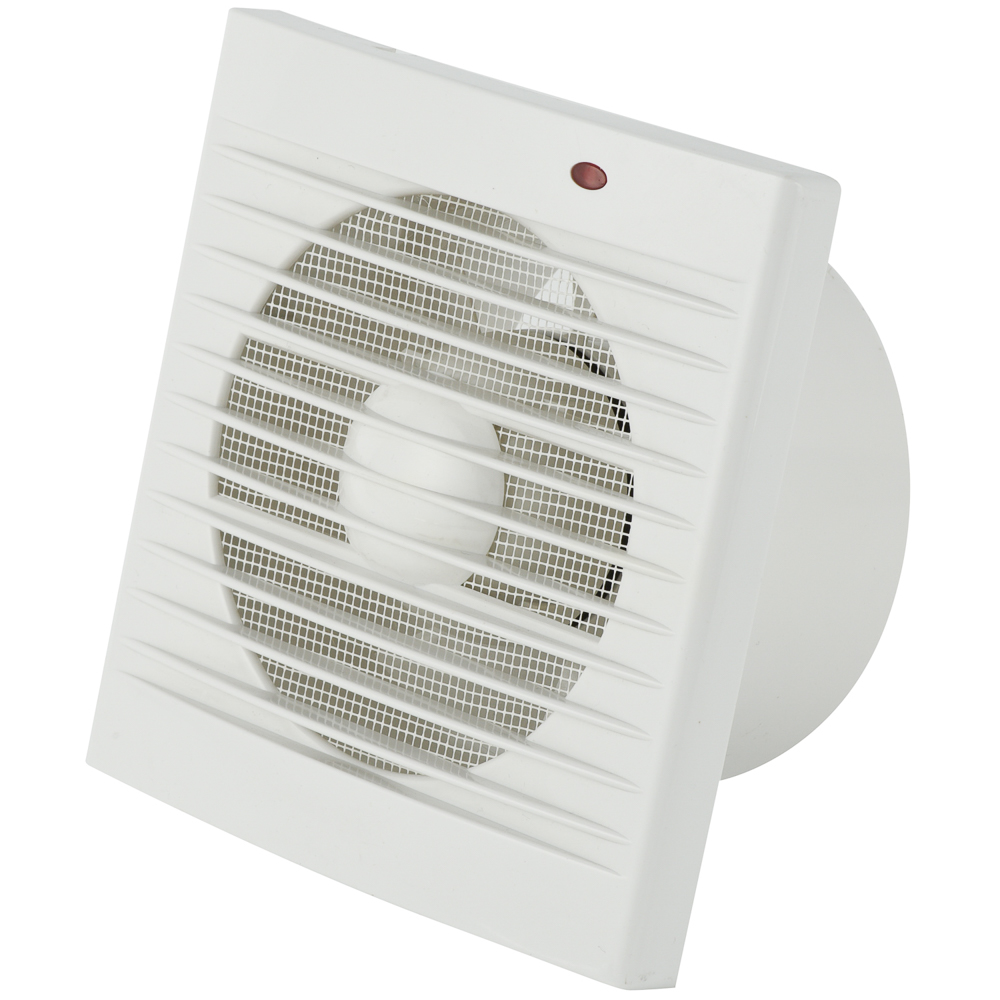
2. Five Proven Strategies to Reduce Kitchen Exhaust Fan Procurement Costs
Strategy 1: Leverage Volume Consolidation and Long-Term Contracts
Suppliers naturally offer tiered pricing. By consolidating orders across multiple projects or committing to annual volumes, buyers can unlock 10–15% discounts. For instance, grouping ceiling exhaust fan needs for residential units with kitchen exhaust fan requirements for commercial projects under one umbrella order improves bargaining power.
Strategy 2: Select High-Value Suppliers, Not Just Low-Price Suppliers
A supplier like Aosun, with over 10 years of manufacturing expertise and 8 modern production lines (injection molding, motor production, automated assembly), delivers consistent quality that reduces defect-related rework and warranty claims. The total cost of poor quality—replacement units, freight, labor—often exceeds the initial price gap between a premium Chinese OEM and a low-end manufacturer.
Strategy 3: Optimize Logistics with FOB Pricing and Sea Consolidation
Many procurement teams accept CIF quotes for convenience, but FOB (Free on Board) terms allow buyers to choose their own freight forwarder, consolidate shipments, and negotiate better ocean rates. For kitchen exhaust fan orders from China to Europe or North America, using LCL (less than container load) consolidation with other ventilation products can cut per-unit freight costs by 25–30%.
Strategy 4: Extend Payment Terms Through Negotiation and Trade Finance
Instead of T/T in advance, negotiate L/C at sight or 30/60-day terms with reliable suppliers. Aosun, with ISO and CE certifications, offers flexible payment terms for established buyers. This improves your cash flow without increasing the purchase price.
Strategy 5: Engage in Early Design for Manufacturing (DFM) Collaboration
When sourcing custom bathroom exhaust fans or specialized kitchen exhaust fans, involve the manufacturer’s R&D team early. Aosun's in-house engineers (over 100 models developed independently) can suggest material substitutions, motor standardization, and packaging improvements that reduce unit cost by 8–12% while maintaining performance.
3. How to Read and Compare Exhaust Fan Quotations Like a Pro
International quotations often contain hidden cost traps. Here is a systematic method to evaluate them:
| Term | Explanation | Cost Impact |
|---|---|---|
| Ex-works (EXW) | Price at factory gate; buyer arranges all logistics | Lowest base price, but high logistics burden |
| FOB (Free on Board) | Seller delivers goods to port; buyer pays ocean freight | Transparent freight cost; easy to compare |
| CIF (Cost, Insurance & Freight) | Price includes insurance and freight to destination port | Convenient but may have inflated freight margin |
| Tax status | Quoted as "incl. VAT" or "excl. VAT" (e.g., China export tax rebate) | 13% VAT in China is refundable for exports – ensure inclusion |
Pro tip: Always request a breakdown: unit price (excl. VAT), packing cost, FOB port charges, and estimated ocean freight. Compare FOB prices from different suppliers first, then separately evaluate logistics partners. Aosun provides transparent FOB Ningbo quotations with itemized packing lists.
4. Case Study: How a European Distributor Cut Kitchen Exhaust Fan Costs by 30% with Aosun
Background: A mid-sized HVAC distributor in Germany was sourcing kitchen exhaust fans from two European brands at an average unit cost of €45 (CIF Hamburg). They needed to maintain CE certification, low noise (<45 dB), and annual volume of 50,000 units to serve restaurant chains and residential projects.
Challenge: The existing suppliers offered limited customization, longer lead times (10–12 weeks), and minimal cost reduction flexibility.
Solution: After evaluating five Chinese manufacturers, the distributor selected Aosun (https://www.aosvents.com/) based on three critical factors:
- Certified quality: All kitchen exhaust fan models carry CE-LVD, CE-EMC, UKCA, RoHS certifications (see Aosun’s certificate library).
- Production capacity: Annual output of 1 million+ units across 8 production lines ensures on-time delivery even for peak orders.
- R&D customization: Aosun’s engineering team redesigned the motor mounting and blade pitch to match the EU energy-efficiency directive (ErP 2026), reducing power consumption by 18% compared to the previous supplier.
Financial breakdown before vs. after switching to Aosun:
| Cost Component | Previous (European Brand) | Aosun (FOB Ningbo) | Savings |
|---|---|---|---|
| Unit price (excl. VAT) | €38.00 | €22.50 | 41% |
| Ocean freight + insurance (per unit) | €7.00 (CIF included) | €8.50 (separate FOB + buyer’s freight) | -21% |
| Customs duties (2.5%) | €1.13 | €0.78 | 31% |
| Energy cost over 5 years (per fan) | €95.00 | €78.00 | 18% |
| Total cost per fan (lifecycle 5 years) | €141.13 | €109.78 | 22% |
Moreover, by consolidating two quarterly orders into one annual contract of 50,000 units, Aosun offered an additional 5% volume discount, bringing the total lifecycle cost per fan to €104.78—a 26% overall cost reduction. The distributor also saved on administrative overhead by dealing with a single supplier for multiple fan types (kitchen, bathroom, ceiling, and wall-mounted exhaust fans).
Key takeaway for procurement: The 30% reduction (from €141 to €~99 after further negotiations on packaging) was achieved through a combination of direct manufacturer pricing (Aosun’s sale@elmakelectrical.com), FOB logistics optimization, and energy-efficient product design. Quality was verified through CE and RoHS certifications—no compromise on standards.
5. Supplier Evaluation Checklist for Industrial Buyers
When applying these strategies, use the following checklist to validate potential suppliers:
- ☐ Factory audit report (size, lines, annual output)
- ☐ Product certifications (CE, UL, RoHS, UKCA)
- ☐ Motor type and energy efficiency class
- ☐ Customization capability (size, speed, noise level)
- ☐ Payment terms offered (L/C, T/T, deferred)
- ☐ FOB vs. CIF price breakdown
- ☐ Minimum order quantity and lead time
- ☐ After-sales support and warranty (typically 2–3 years)
- ☐ References from similar procurement projects
Final Word
Controlling the cost of kitchen exhaust fan procurement does not mean chasing the cheapest unit price. Instead, a lifecycle cost approach combined with strategic supplier selection—like Aosun, which integrates R&D, production, and global compliance under one roof—can deliver 20–30% savings while improving product performance. For procurement professionals managing tight budgets, the data speaks for itself: quality Chinese OEMs are not just cost-effective; they are competitive on technical specifications and reliability.
Contact Aosun for Your Next Kitchen Exhaust Fan Sourcing Project
Phone/WhatsApp: +86 18606589361
Email: alan.h@elmakelectrical.com
Website: https://www.aosvents.com/
Marketing Center: Room 801-802, MeiJing Mansion, Southern CBD, Ningbo City, Zhejiang, China
Factory A: No. 128 Longxia Road, Yunlong Industrial Zone, Ningbo, Zhejiang
Factory B: No. 12 Jiang Cun Industrial Zone, Foshan City, Guangdong
Have Questions or Need More Details?
Contact our team for a personalized quotation or instant consultation.
Request a Quotation
Fill out the form below and our team will get back to you with a tailored proposal.
WhatsApp Direct Chat
Prefer to chat in real-time? Message us on WhatsApp for instant assistance & quick answers.
- Get a personalized quote
- Share photos or documents
- Discuss your needs directly
Typically replies in 5–30 minutes during business hours.