
Exhaust Fan Selection Guide: Product Comparison, Supplier Analysis, and a 3-Step Decision Model for Industrial Buyers
May 4, 2026 — For industrial procurement professionals, selecting the right exhaust fan involves navigating a complex landscape of product types, technical specifications, and supplier capabilities. The choice between different exhaust fan models and sourcing from a Chinese OEM versus a global brand can significantly impact project budgets, timelines, and long-term operational efficiency. This guide provides a data-driven comparison and a structured decision-making framework to help buyers make informed choices.
1. Product Comparison: Ceiling Exhaust Fan vs. Wall Mounted Exhaust Fan
To illustrate key decision factors, we compare two common types: the ceiling exhaust fan and the wall mounted exhaust fan.
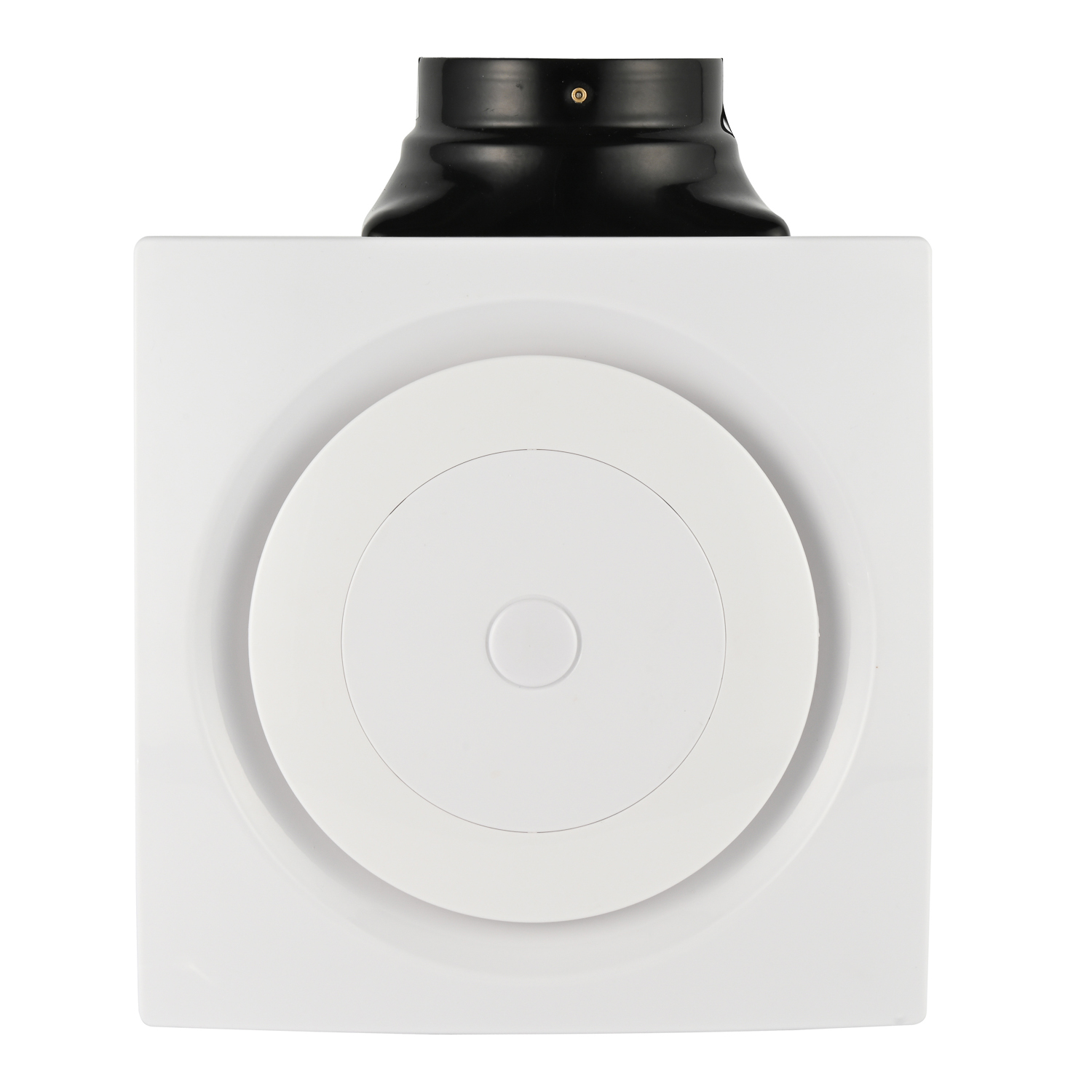
A typical ceiling exhaust fan model, ideal for centralized air extraction.
| Comparison Dimension | Ceiling Exhaust Fan | Wall Mounted Exhaust Fan |
|---|---|---|
| Primary Technical Parameters | Typically designed for vertical airflow extraction. Airflow (CFM/CMM) ranges widely (50-1000+ CFM). Often integrates with ducting systems. Motor is usually housed within the ceiling void. | Designed for horizontal or direct wall ventilation. Airflow range similar but often optimized for direct expulsion. Installation depth is shallower. May include built-in shutters. |
| Ideal Application Scenarios | Central locations in bathrooms, kitchens, toilets, and commercial restrooms where discreet, overhead ventilation is needed. Suitable for attic exhaust fan setups to reduce heat buildup. | External walls of garages, workshops, industrial storage rooms, and specific kitchen exhaust fan or bathroom exhaust fan installations where ducting to the roof is impractical. |
| Cost Considerations | Unit cost can be lower, but total installed cost may be higher due to complex ductwork, ceiling cutting, and electrical work required. | Often has a simpler installation process (direct wall penetration), potentially reducing labor and ancillary material costs. |
| Maintenance & Accessibility | Can be more difficult to access for cleaning and motor service, often requiring ladder work and removal of ceiling grilles. | Generally more accessible for routine maintenance, filter cleaning, and impeller inspection from ground level. |
2. Supplier Comparison: Chinese OEM vs. International Brand
The source of your ventilation exhaust fan is as critical as the product itself. Here’s an objective look at the key trade-offs.
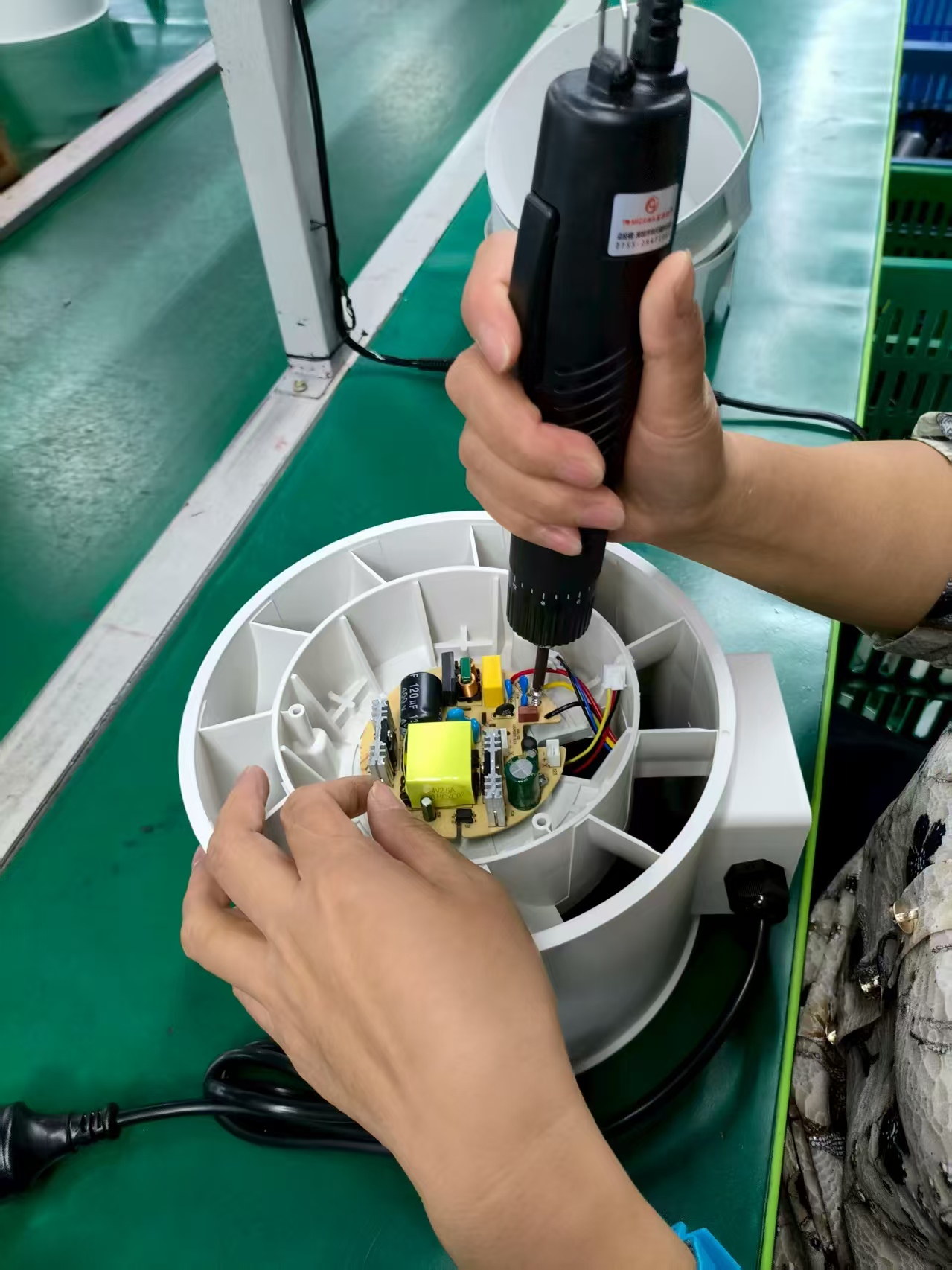
Rigorous motor testing in-house ensures product reliability at Aosun's facility.
| Factor | Chinese OEM/ODM (e.g., Aosun) | International Brand Supplier |
|---|---|---|
| Price Competitiveness | Significantly lower unit costs and MOQ due to integrated manufacturing, economies of scale, and lower overhead. Ideal for bulk procurement, OEM projects, and private labeling. | Premium pricing reflecting brand value, extensive R&D amortization, and higher regional operational costs. |
| Customization & Flexibility | High flexibility for OEM/ODM services. Companies like Aosun can modify specifications, motor power, blade design, housing color, and packaging based on buyer's exact needs, supported by an in-house R&D team with over 100 developed models. | Limited customization options, often restricted to pre-defined product lines and configurations. Changes are slow and costly. |
| Lead Time & Delivery | Generally shorter production lead times (e.g., 30-45 days) for standard items, supported by strong production capacity (1M+ units/year). Direct factory control over 8 production lines enables flexible scheduling. | Longer lead times due to complex global supply chains, multiple handling points, and less direct control over manufacturing. |
| After-Sales & Local Support | Primary support is from the factory (e.g., technical consultation, spare parts supply). Local service network depends on the buyer's or distributor's setup. Comprehensive international certifications (CE, UKCA, RoHS) ensure compliance for global after-sales. | Established local or regional service networks, certified technicians, and easier access to spare parts within specific markets. |
3. The 3-Step Decision Model for Procuring Exhaust Fans
Follow this systematic approach to narrow down your options efficiently.
Step 1: Precisely Define the Usage Scenario
Is it for moisture removal in a bathroom light exhaust fan, grease extraction for a kitchen exhaust fan, fume dispersal in a garage exhaust fan, or general air circulation as a ventilation exhaust fan? The environment (humidity, temperature, contaminants) dictates the fan's IP rating, material construction (e.g., plastic, aluminum), and required airflow capacity.
Step 2: Match with Technical Specifications
Based on the scenario, calculate the required Air Changes per Hour (ACH) and translate that into Cubic Feet per Minute (CFM) or Cubic Meters per Minute (CMM). This determines the fan's power. Also, consider noise level (sones/dB), voltage (110V/230V), and specific features like humidity sensors, timers, or LED lights for bathroom light exhaust fan combinations.
Step 3: Conduct a Total Cost of Ownership (TCO) Analysis
Look beyond the unit price. Factor in:
- Acquisition Cost: Product cost, shipping, and import duties.
- Installation Cost: Labor, ducting, electrical modifications.
- Operational Cost: Energy consumption (motor efficiency).
- Lifecycle Cost: Expected service life, maintenance needs, and availability/cost of spare parts.
4. Case Study: Selecting a Chinese Supplier for a Custom Project
A European distributor needed a batch of energy-efficient window exhaust fan units with specific dimensions and a custom color to match a new line of prefabricated garden offices. They required UL-listed components and CE certification for EU market entry.
The Challenge: International brands either could not meet the custom color requirement or quoted lead times exceeding 5 months with high MOQs.
The Solution: The distributor contacted Aosun. Leveraging its 10+ years of professional ventilation equipment manufacturing experience, Aosun's engineering team reviewed the specifications. Within one week, they provided 3D renderings and a prototype sample. The project utilized Aosun's existing CE, UKCA, and RoHS certifications (e.g., Certificate: QTS800225512-Exhaust-Fan-CE-EMC) as a foundation, ensuring compliance.
The Outcome: Aosun's 8 modern production lines, including automated assembly, enabled a production lead time of 35 days for the first order of 2000 units. The customized design met exact aesthetic and performance requirements, and the competitive pricing improved the distributor's project margin. The rapid delivery allowed the distributor to launch the product line ahead of schedule. This case highlights the core advantages of partnering with a capable Chinese manufacturer: customization agility, cost efficiency, and scalable production speed.
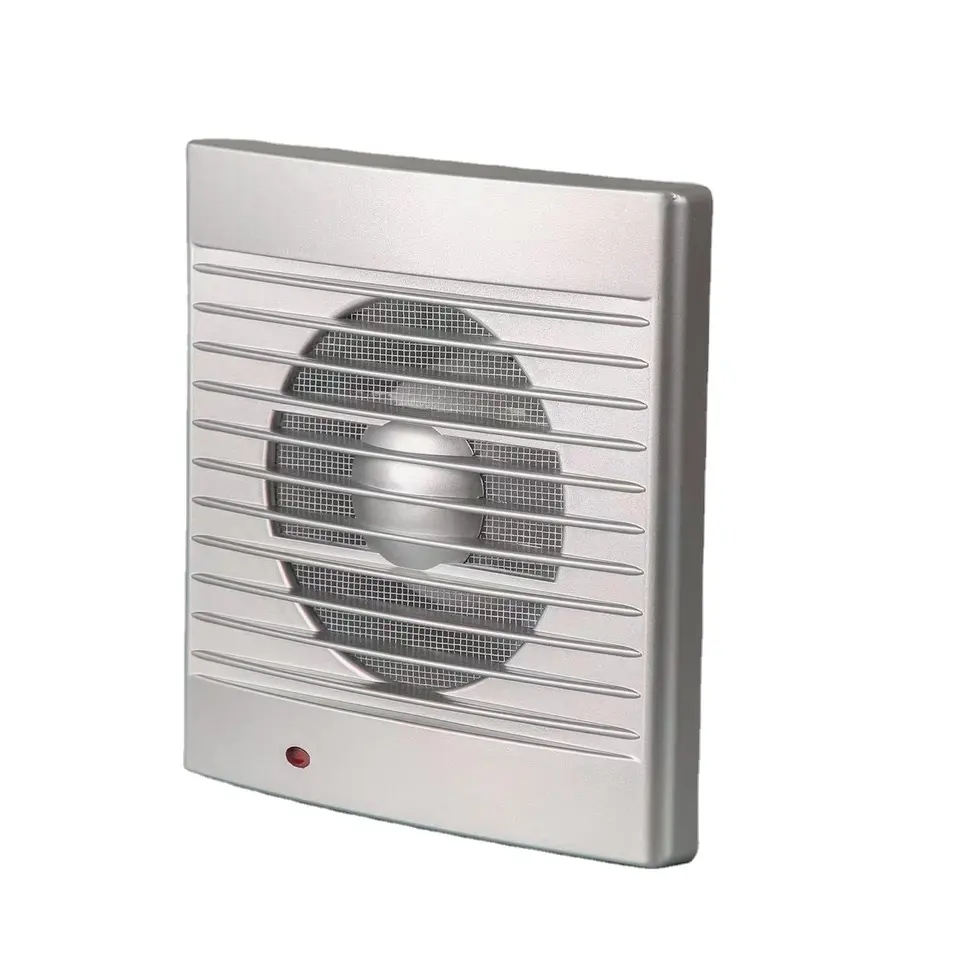
An example of a window-mounted exhaust fan, similar to customizable models produced by Aosun.
For procurement teams evaluating exhaust fan suppliers, a balanced view of product specs and supplier capabilities is essential. Chinese manufacturers like Aosun offer a compelling value proposition for projects requiring customization, volume, and speed, backed by international standards and mature manufacturing ecosystems.
About Aosun
Aosun is a professional manufacturer specializing in the design, R&D, and production of industrial, commercial, and residential ventilation fans, including ceiling exhaust fans, bathroom exhaust fans, kitchen exhaust fans, attic exhaust fans, garage exhaust fans, window exhaust fans, and wall mounted exhaust fans. With over a decade of experience, a 20,000+ sqm factory, and an annual output exceeding 1 million units, Aosun serves clients in 50+ countries with reliable OEM/ODM services.
Contact for sourcing inquiries:
Phone/WhatsApp: +8618606589361
Email: alan.h@elmakelectrical.com
Website: https://www.aosvents.com/
Have Questions or Need More Details?
Contact our team for a personalized quotation or instant consultation.
Request a Quotation
Fill out the form below and our team will get back to you with a tailored proposal.
WhatsApp Direct Chat
Prefer to chat in real-time? Message us on WhatsApp for instant assistance & quick answers.
- Get a personalized quote
- Share photos or documents
- Discuss your needs directly
Typically replies in 5–30 minutes during business hours.