
Mastering Exhaust Fan Specifications and Manufacturing: A Technical Deep Dive for Industrial Engineers and Sourcing Managers
Mastering Exhaust Fan Specifications and Manufacturing: A Technical Deep Dive for Industrial Engineers and Sourcing Managers
Whether you are specifying a ceiling exhaust fan for a commercial restroom, a kitchen exhaust fan for a restaurant, or an attic exhaust fan for passive ventilation, understanding critical technical parameters and how manufacturing processes affect long-term reliability is essential. This guide decodes the most important performance indicators and reveals why choosing a certified manufacturer like Aosun ( https://www.aosvents.com/ ) can save project costs and ensure consistent quality.
1. Core Technical Parameters: How to Read and Compare
When evaluating an exhaust fan datasheet, engineers should focus on four primary metrics. Misunderstanding them can lead to inadequate ventilation or excessive energy consumption.
💨 Airflow (CFM / m³/h)
Airflow is the volume of air moved per unit time. For a bathroom exhaust fan or toilet exhaust fan, the required CFM depends on room area (ASHRAE 62.2 recommends 1 CFM per sq ft for bathrooms). However, CFM measured at the fan outlet differs from actual delivered airflow due to static pressure losses. Always check the CFM vs. static pressure curve.
📊 Static Pressure (Pa or in.wg)
Static pressure measures the fan’s ability to overcome resistance from ductwork, dampers, and grilles. A wall mounted exhaust fan or window exhaust fan installed without ducting may require lower static pressure, while a ventilation exhaust fan connected to long ducts needs higher static capability. Aosun’s ceiling exhaust fan models are tested at multiple static points to provide realistic performance data.
🔊 Noise Level (dB(A))
Noise is critical for occupied spaces. A bathroom light exhaust fan should typically operate below 1.5 sones (≈ 38–42 dB). The sone scale is more perceptually accurate than decibels for low frequencies. Look for fans with sound-absorbing insulation and aerodynamic impeller designs.
⚡ Energy Efficiency (W/CFM or EC Motor)
EC motors (electronically commutated) can reduce energy consumption by 40–60% compared to shaded-pole motors. Many kitchen exhaust fan and garage exhaust fan specifications now mandate EC motors to meet EU ERP 2025 requirements. Aosun’s production lines integrate high-efficiency motor windings and precision-balanced rotors to achieve industry-leading efficiency.
2. Manufacturing Processes & Their Impact on Quality
The durability and performance of any exhaust fan are fundamentally determined by how it is built. Below are the critical processes that separate premium fans from budget alternatives.
🔧 Injection Molding of Impellers and Housings
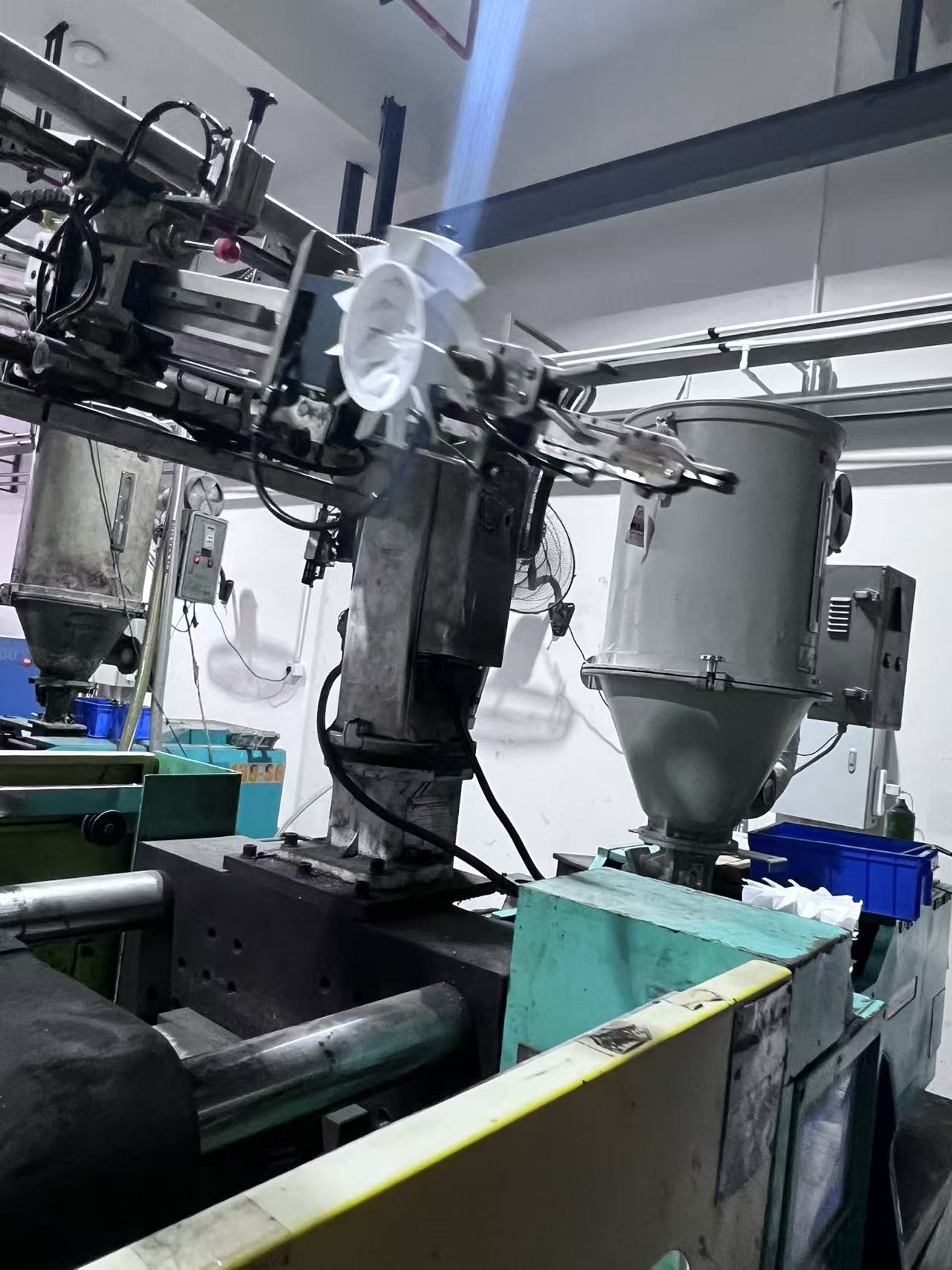
High-quality ABS or PA66 materials with UV stabilizers prevent yellowing and brittleness. Aosun operates over 20 dedicated injection molding machines with precise temperature and pressure control, ensuring consistent blade pitch and surface finish. This directly impacts airflow efficiency and noise. Poorly molded impellers cause imbalance, vibration, and premature bearing failure.
⚙️ Motor Winding & Rotor Assembly
Copper windings with high-grade enameled wire and automatic winding machines guarantee uniform turns and resistance. Aosun’s motor production line (8 specialized lines) includes dynamic balancing of rotor assemblies to less than 5 mg·mm imbalance. This results in quieter operation and longer bearing life — essential for attic exhaust fan units that run continuously in hot environments.
🔬 Automated Assembly & In-Line Testing
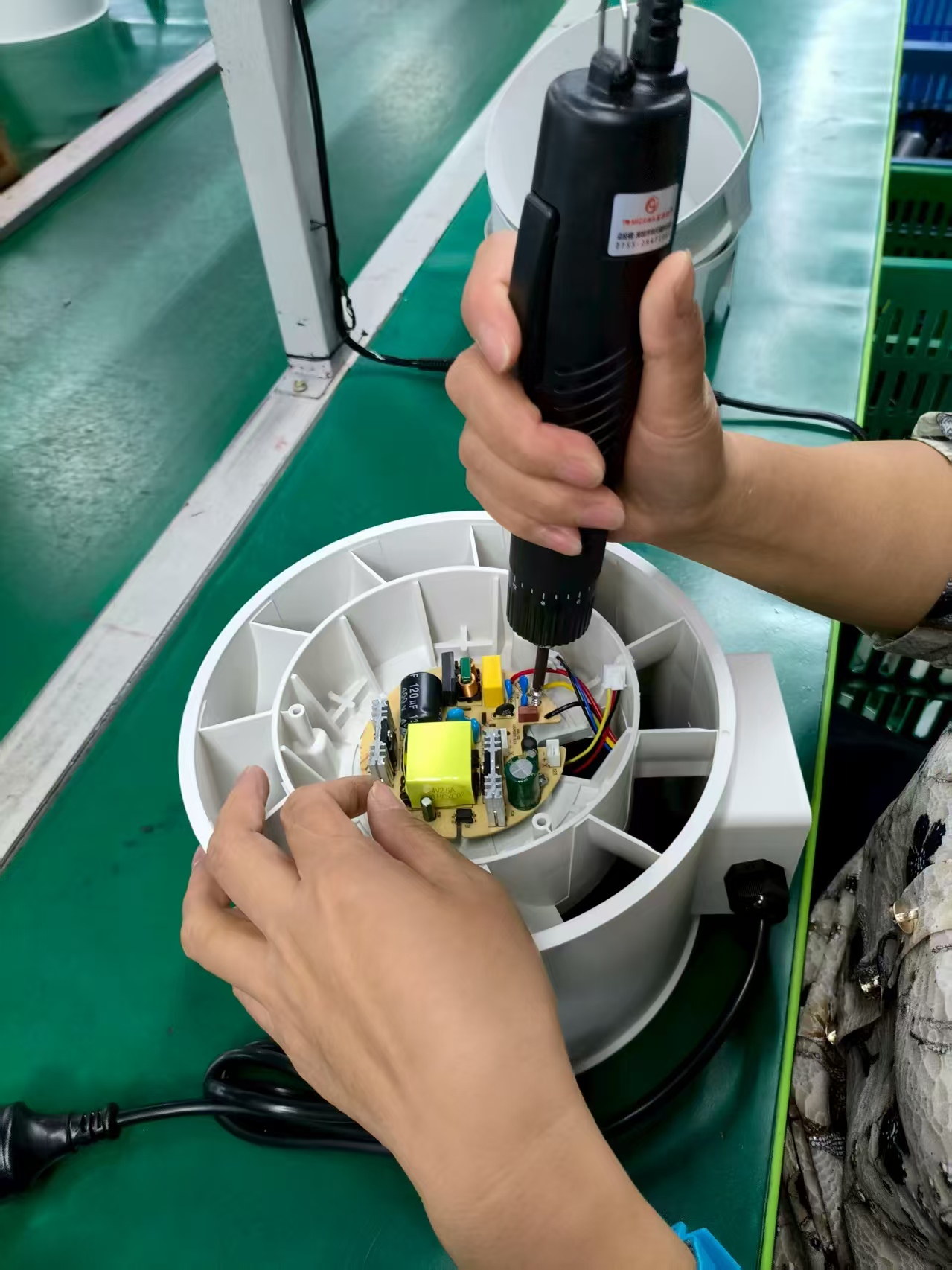
Fully automated assembly lines (pictured below) ensure repeatable tolerances within ±0.1 mm. Every fan undergoes a 100% test for airflow, current, noise, and vibration before packaging. Aosun’s in-house fan air volume detection room uses an AMCA-standardized wind tunnel to verify CFM and static pressure curves. This rigorous quality control is why Aosun holds CE, UKCA, RoHS, and LVD certifications.
3. Common Misconceptions in Specification Reading
Even experienced procurement professionals can fall into these traps:
- Misconception #1: Relying solely on maximum CFM. The CFM listed at zero static pressure is rarely achieved in real ducted installations. Insist on a performance curve graph that shows CFM at 25, 50, 75, and 100 Pa. Aosun provides these curves for every model, including ceiling exhaust fan and wall mounted exhaust fan.
- Misconception #2: Ignoring sound quality vs. sound level. Two fans with the same dB(A) rating can sound very different due to tonal components (blade-pass frequency). Request a spectrogram or sone rating. Aosun’s bathroom light exhaust fan series uses swept-blade impellers to distribute noise evenly, reducing perceived loudness.
- Misconception #3: Treating all “energy-saving” claims equally. Shaded-pole motors can be labeled “high efficiency” but draw more power than EC motors. Verify the actual Wattage at operating speed. For a garage exhaust fan running 10 hours/day, the difference can exceed $50/year in electricity.
4. China’s Technical Edge: Why Aosun Leads
Chinese manufacturers have invested heavily in automation, R&D, and certification. Aosun exemplifies this transformation with:
- ✅ 8 fully integrated production lines covering injection molding, motor winding, assembly, and testing — ensuring end-to-end quality control.
- ✅ Over 100 product models including specialized toilet exhaust fan, window exhaust fan, and attic exhaust fan, all designed by an in-house R&D team with 10+ years of experience.
- ✅ International certifications (CE, UKCA, RoHS, LVD, EMC) — verified by third-party labs — giving buyers confidence in compliance.
- ✅ Annual capacity of 1 million units with flexible scheduling for OEM/ODM. Aosun exports to 50+ countries, delivering ventilation exhaust fan solutions that meet local energy codes.
By choosing Aosun (https://www.aosvents.com/), you gain access to a partner that understands both the engineering nuances and the economic realities of global sourcing.
Contact Aosun today for technical datasheets or samples:
📞 Phone/WhatsApp: +86 186 0658 9361
📧 Email: alan.h@elmakelectrical.com
🏢 Marketing Center: Room 801-802, MeiJing Mansion, Southern CBD, Ningbo, China
🏭 Factory A: No. 128 Longxia Road, Yunlong Industrial Zone, Ningbo, China
🏭 Factory B: No. 12 Jiang Cun Industrial Zone, Foshan, China
Have Questions or Need More Details?
Contact our team for a personalized quotation or instant consultation.
Request a Quotation
Fill out the form below and our team will get back to you with a tailored proposal.
WhatsApp Direct Chat
Prefer to chat in real-time? Message us on WhatsApp for instant assistance & quick answers.
- Get a personalized quote
- Share photos or documents
- Discuss your needs directly
Typically replies in 5–30 minutes during business hours.