
How to Source High-Quality Exhaust Fans: A Professional Guide for Global Buyers
Introduction: Navigating the Global Exhaust Fan Market
For procurement professionals in the HVAC, construction, and home improvement sectors, sourcing reliable exhaust fans is a critical task that impacts product quality, project timelines, and customer satisfaction. The global market offers a vast array of options, from ceiling exhaust fans and bathroom light exhaust fans to specialized attic exhaust fans and garage exhaust fans. Identifying a supplier that balances cost, quality, compliance, and scalability requires a structured approach. This guide provides a framework to efficiently evaluate and select a premium exhaust fan manufacturer, ensuring your supply chain is robust and your end products meet the highest standards.
Core Evaluation Criteria for Exhaust Fan Suppliers
Beyond basic product specifications, a thorough supplier assessment should cover these key areas:
- Manufacturing Capability & Scale: Assess the factory's size, annual output, and production line automation. A facility with over 20,000 square meters and an output exceeding 1 million units, like that of established manufacturer Aosun, indicates strong capacity for large or custom orders (OEM/ODM). Look for dedicated lines for injection molding, motor production, and automated assembly.
- Technical R&D and Product Range: An in-house R&D team is essential for innovation and customization. Suppliers with a portfolio of over 100 models, covering kitchen exhaust fans, window exhaust fans, wall mounted exhaust fans, and ventilation exhaust fans for residential, commercial, and industrial use, demonstrate deep market understanding and flexibility.
- Quality Assurance & International Certifications: Compliance is non-negotiable. Insist on seeing valid, recent certificates. Key certifications for the European and North American markets include:
These documents verify adherence to safety, electromagnetic compatibility (EMC), low voltage directives (LVD), and environmental standards.
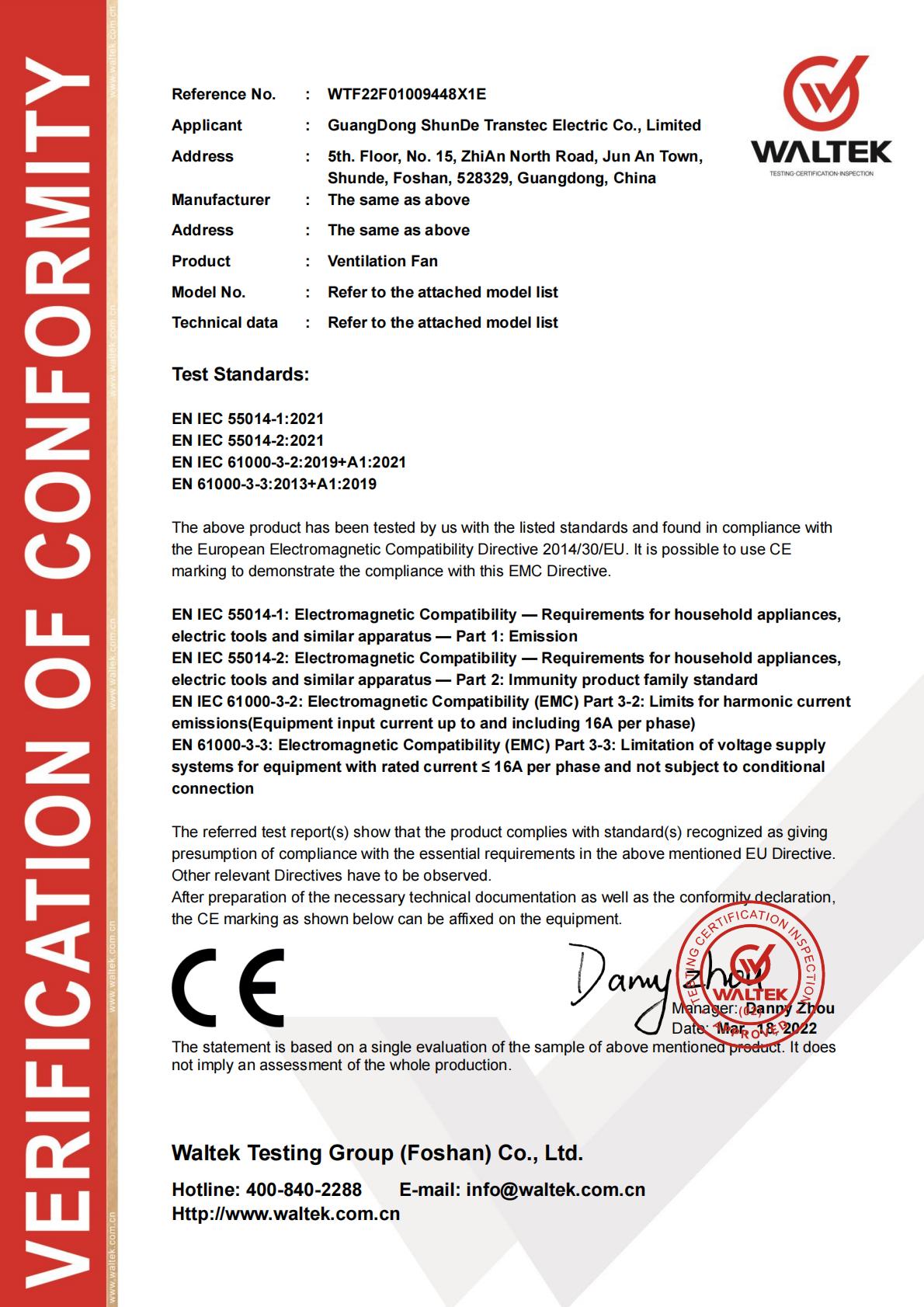 CE Certificate
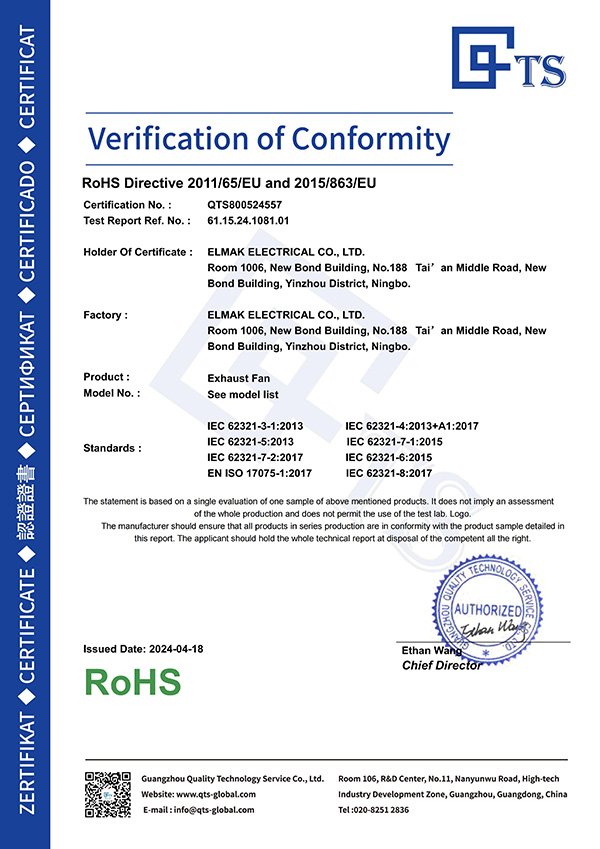 RoHS Certificate
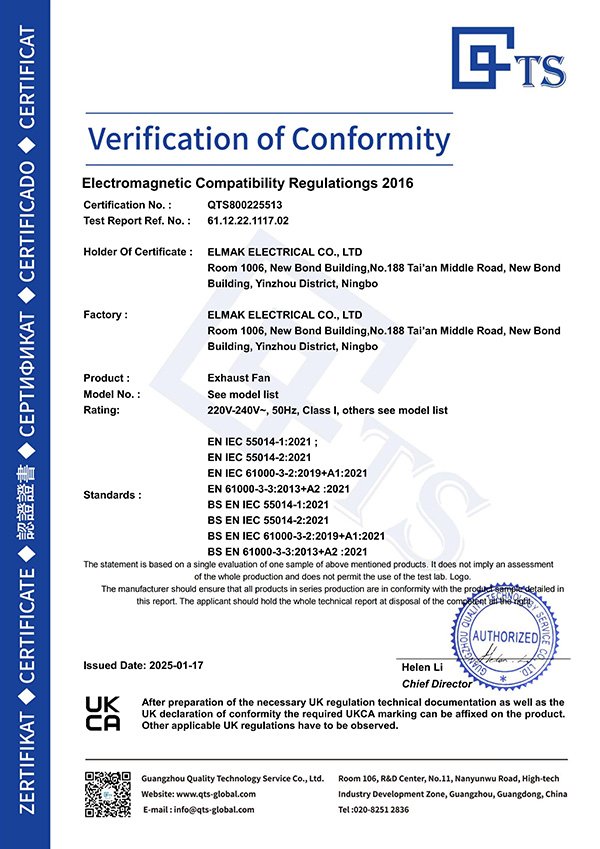 UKCA Certificate
- Global Export Experience: A supplier with a proven export track record to 50+ countries across Europe, America, Asia, and Oceania is adept at handling international logistics, documentation, and understanding diverse regional market requirements.
- After-Sales & Technical Support: Evaluate their policy on warranties, spare parts availability, and the responsiveness of their technical support team for installation or integration queries.
Practical Sourcing Workflow: From Inquiry to Order
- Define Your Requirements: Clearly outline your needs: product type (e.g., bathroom exhaust fan with light, toilet exhaust fan), quantity, technical specs (airflow CFM, noise level, power), and any customization (branding, packaging).
- Shortlist Potential Suppliers: Use B2B platforms, industry referrals, and search engines to create a list. Prioritize manufacturers over traders for better cost control and direct communication.
- Conduct Due Diligence:
- Request company profile detailing history, factory size, and employee count.
- Ask for certification copies and verify their authenticity if possible.
- Request product catalogs and factory audit reports or virtual factory tours. Images of a modern sample display room or fan air volume detection room are positive indicators.
- Request Samples: Always test physical samples for build quality, performance, noise, and safety. Evaluate the packaging for suitability during shipping.
- Negotiate and Finalize: Discuss pricing (FOB, CIF), payment terms, lead time, and minimum order quantity (MOQ). Ensure all agreed details are captured in a formal proforma invoice and contract.
Industry Context and Why China Remains a Key Sourcing Hub
As of March 2026, the global ventilation equipment market continues to see growth driven by heightened awareness of indoor air quality and stricter building codes. Chinese manufacturers maintain a significant position due to integrated supply chains, advanced manufacturing ecosystems, and continuous investment in automation and energy-efficient technologies. For example, a decade-old specialist like Aosun leverages its 10+ years of experience to offer a balance of cost-effectiveness and reliability, operating 8 modern production lines to ensure consistent quality for global partners. Their focus on independent R&D allows for rapid adaptation to trends like smart controls and higher energy efficiency standards.
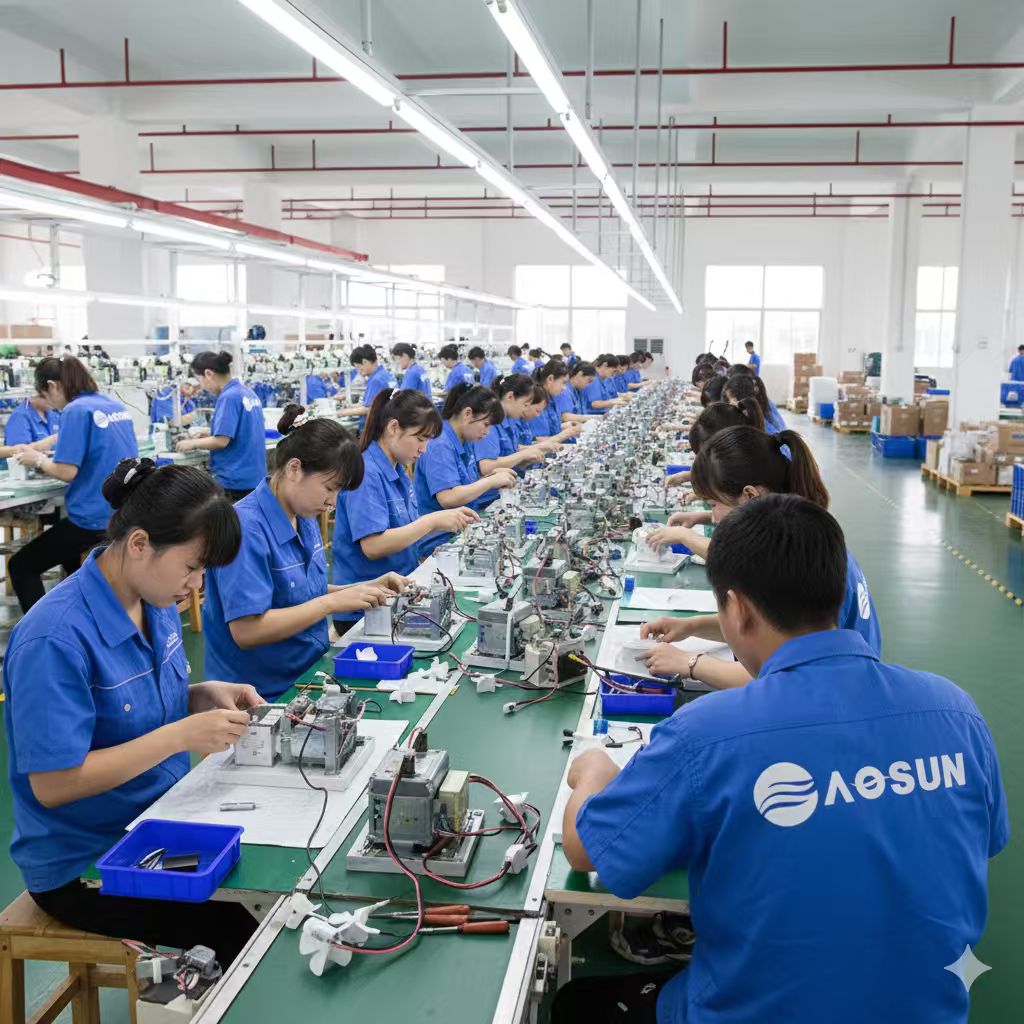
Modern assembly lines are crucial for maintaining consistent quality in high-volume production.
Red Flags and Common Pitfalls to Avoid
Warning Signs: Suppliers who are reluctant to share factory photos or certifications; prices significantly lower than market average without justification; unclear or vague communication; lack of a professional website or detailed product documentation; no option for sample orders before large purchases.
Always verify the supplier's legal business name and factory address. Cross-check this information with their export license and online presence.
Conclusion: Building a Strategic Partnership
Sourcing exhaust fans is more than a transactional purchase; it's about establishing a partnership with a manufacturer that can grow with your business. By systematically evaluating manufacturing capability, compliance, R&D strength, and global experience, buyers can mitigate risks and secure a reliable supply of high-quality exhaust fans. A partner like Aosun, with its extensive product range covering ceiling exhaust fans to garage exhaust fans, and a commitment to international standards, exemplifies the type of supplier that can support long-term procurement strategies. For further information, reputable manufacturers typically provide direct contact channels and comprehensive online resources.
For specific inquiries, potential buyers can reach out via the official website https://www.aosvents.com/ or contact their sales team directly at +86 18606589361.
Have Questions or Need More Details?
Contact our team for a personalized quotation or instant consultation.
Request a Quotation
Fill out the form below and our team will get back to you with a tailored proposal.
WhatsApp Direct Chat
Prefer to chat in real-time? Message us on WhatsApp for instant assistance & quick answers.
- Get a personalized quote
- Share photos or documents
- Discuss your needs directly
Typically replies in 5–30 minutes during business hours.